

A Gentle Guide for OCD & Anxiety
If you’ve ever heard someone say ERP is the “gold standard” treatment for OCD but felt intimidated, confused, or unsure what that actually means — you’re not alone.
ERP can sound intense at first, especially if anxiety already feels overwhelming. Many people imagine being forced to face their worst fears or pushed faster than they can handle. That isn’t what ERP truly is.
This guide is here to explain what ERP really is, how it works, and what it isn’t — in a calm, compassionate, and supportive way.
First, What Does ERP Stand For?
ERP stands for Exposure and Response Prevention.
It’s an evidence-based therapy most commonly used to treat:
- Obsessive-Compulsive Disorder (OCD)
- Intrusive thoughts
- Anxiety disorders
- Certain phobias and related concerns
At its core, ERP helps you:
- Respond differently to anxiety
- Reduce compulsive or ritual behaviors (including mental rituals)
- Build tolerance for uncertainty
- Get your life back from fear
ERP is not about pushing you into distress. It’s about helping your nervous system learn that you are safe — without needing to constantly control, avoid, analyze, or “fix” every thought.
How OCD & Anxiety Keep You Stuck
OCD and anxiety often follow a predictable cycle:
1️. A distressing or intrusive thought, image, memory, or fear shows up
2️. Anxiety spikes
3️. You try to neutralize it by:
- Reassuring yourself
- Asking others for reassurance
- Checking
- Avoiding
- Mentally reviewing
- Fixing or correcting
4️. You feel temporary relief
5️. The thought returns — often stronger than before
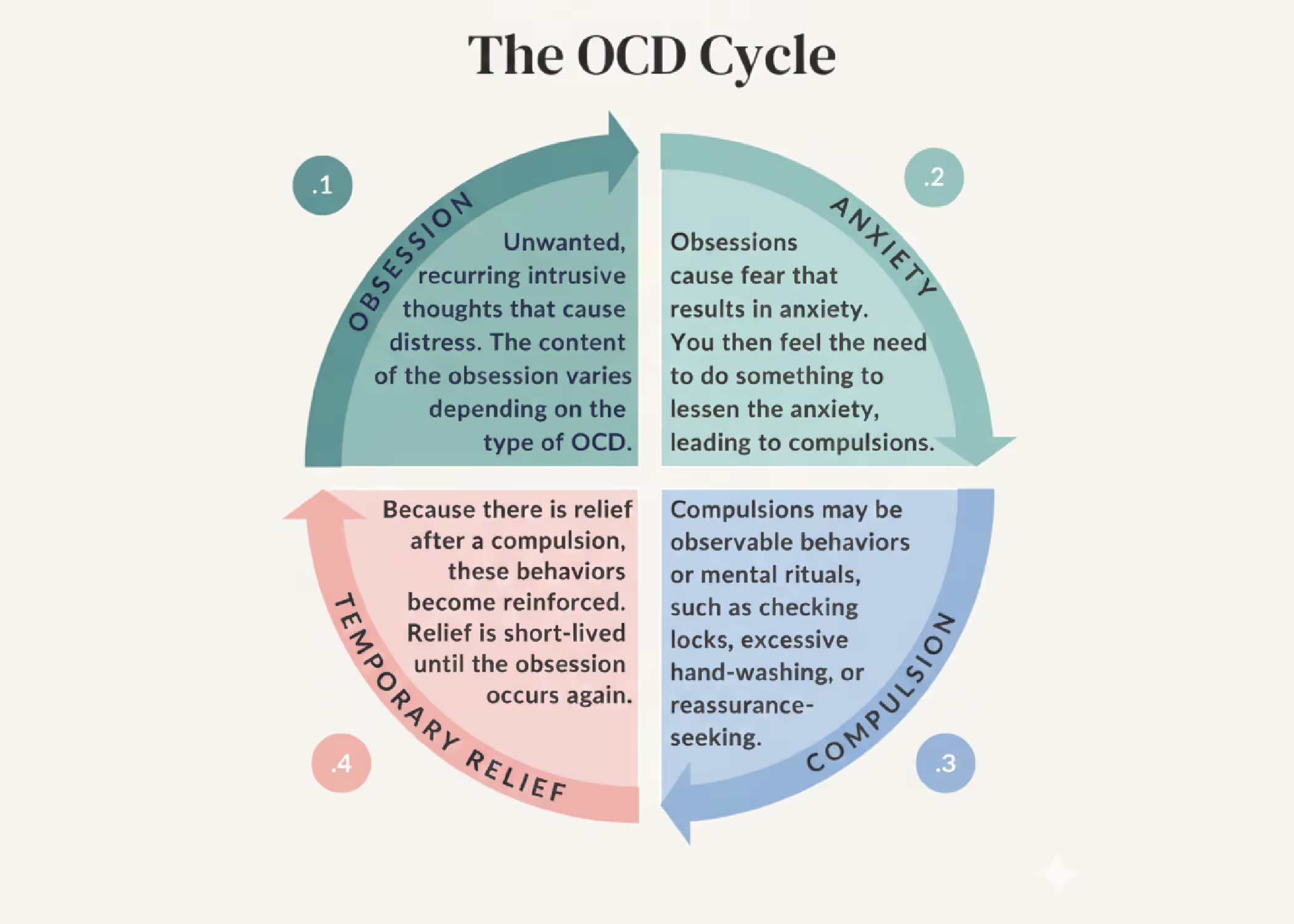
Over time, your brain learns: “This thought is dangerous. I must respond to it immediately.” ERP retrains this response.
What “Exposure” Means
Many people hear “exposure” and imagine being thrown into their worst fear. That is not ERP.
Exposure simply means:
- Intentionally allowing thoughts, feelings, sensations, or situations that trigger anxiety
- Doing so gradually and thoughtfully
- Practicing staying present without escaping or neutralizing the anxiety
The goal is not to feel calm right away. The goal is to learn that anxiety can rise and fall naturally — and that you don’t need compulsions to survive it.
What “Response Prevention” Means
Response prevention means choosing not to engage in compulsions — even when your anxiety urges you to.
Compulsions may include:
- Reassurance-seeking
- Rumination
- Mental checking or reviewing
- Avoiding situations
- Repeating phrases or rituals
- Trying to gain certainty
In ERP, we practice not giving in to these urges — one step at a time. This is how your brain learns: “I can feel discomfort without doing the compulsion. I am safe.”
What ERP Therapy Is NOT
ERP is not:
- Forcing you to do anything you’re not ready for
- Ignoring your emotions
- Telling you your fears are silly or irrational
- Trying to prove your thoughts wrong
- A way to eliminate anxiety forever
ERP is about changing your relationship with anxiety, not fighting it.
What ERP Therapy Actually Looks Like
ERP sessions are:
- Collaborative
- Thoughtfully paced
- Planned together
- Grounded in safety and consent
We begin by:
- Understanding your unique OCD or anxiety experiences
- Identifying patterns and triggers
- Learning grounding and coping skills
- Creating a gradual exposure plan
There is no surprise exposure, no pushing, no shaming. You are always in control of the pace.
Why ERP Works
ERP works because it helps your brain learn through experience, not logic alone.
Over time, many clients notice:
- Anxiety feels less powerful
- Intrusive thoughts feel less threatening
- Urges to perform compulsions weaken
- More emotional freedom and peace
- Stronger confidence handling uncertainty
This doesn’t happen overnight — but it does happen.
Is ERP Right for Me?
ERP may be helpful if you:
- Feel stuck in cycles of intrusive thoughts
- Rely on reassurance or rituals to cope
- Avoid situations due to anxiety
- Feel constantly trapped in your mind
- Want relief without overanalyzing every thought
You do not need to feel “ready” or brave to begin. Curiosity is enough.
A Gentle Reminder
Having intrusive thoughts does not say anything bad about you.
ERP is not about changing who you are — it’s about helping you live life without fear calling all the shots. You deserve to feel safe inside your own mind.
Support exists, and you don’t have to do this alone.
Ready to Learn More?
If you’re curious about ERP therapy or wondering whether it might help with what you’re experiencing, I offer a free consultation. This is a low-pressure, compassionate space to ask questions, talk through concerns, and see if ERP feels like a good fit.
Schedule a Free Consultation
Learn more about ERP Therapy for OCD & Intrusive Thoughts
You deserve relief. You deserve peace. And support is available